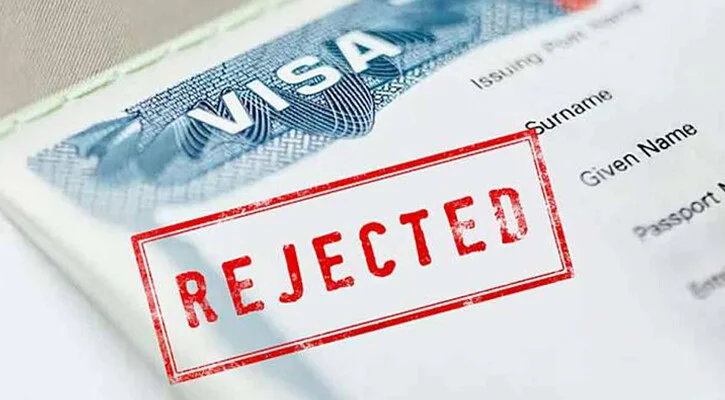
On December 16, 2025, President Donald Trump issued Presidential Proclamation 10998, titled “Restricting and Limiting the Entry of Foreign Nationals to Protect the Security of the United States.” This proclamation expands on earlier actions, including Executive Order 14161 (issued January 20, 2025) and Proclamation 10949 (issued June 4, 2025), by fully or partially suspending entry and visa issuance for nationals from 39 countries, as well as individuals using travel documents issued or endorsed by the Palestinian Authority.
Key Details of the Restrictions
- Effective Date: The expanded restrictions took effect on January 1, 2026, at 12:01 a.m. EST.
- Fully Suspended Countries (19 total): Visa issuance is fully suspended for all nonimmigrant and immigrant visa categories for nationals of Afghanistan, Burkina Faso, Burma, Chad, Republic of the Congo, Equatorial Guinea, Eritrea, Haiti, Iran, Laos, Libya, Mali, Niger, Sierra Leone, Somalia, South Sudan, Sudan, Syria, and Yemen. This builds on the 12 countries initially restricted under Proclamation 10949 (Afghanistan, Burma, Chad, Republic of the Congo, Equatorial Guinea, Eritrea, Haiti, Iran, Libya, Somalia, Sudan, and Yemen).
- Partially Suspended Countries (20 additional): Entry is restricted for nationals from Burundi, Cuba, Togo, Turkmenistan, Venezuela, and 15 others (not fully listed in all sources but implied in expansions). Restrictions often target specific visa types like B-1 (business), B-2 (tourism), F (student), M (vocational), and J (exchange) visas, with reduced validity periods for other nonimmigrant visas.
- Palestinian Authority: Full suspension for individuals traveling on documents issued or endorsed by the Palestinian Authority.
- Rationale: The administration cites deficient screening and vetting information from these countries, posing risks to U.S. national security and public safety. It invokes Section 212(f) of the Immigration and Nationality Act (INA) to justify the suspensions.
Exceptions
Limited exceptions apply, including:
- Diplomatic and official visas.
- Immigrant visas for ethnic and religious minorities facing persecution (e.g., in Iran).
- Dual nationals using a passport from a non-restricted country.
- Special Immigrant Visas (SIVs) for U.S. government employees.
- Cases where entry advances a critical U.S. national interest (e.g., athletes for events like the 2026 FIFA World Cup or 2028 Olympics).
- U.S. permanent residents, citizens with dual nationality, and certain family-based immigrants or adoptees.
Additional Recent Actions on Visas
- Public Charge Suspension (Starting January 21, 2026): Separately, the State Department is set to pause immigrant visa processing for applicants from 75 countries (full list not yet public) deemed likely to become a “public charge” (i.e., dependent on public assistance). This directive, effective tomorrow, requires embassies to halt decisions while reassessing vetting under existing law. It does not affect nonimmigrant visas but targets those who might “exploit the generosity of the American people.”
- Other Related Executive Actions: These build on broader immigration policies, such as Executive Order 14161 (extreme vetting restoration) and the end of programs like the Diversity Visa Lottery and Family Reunification Parole. Earlier actions from Trump’s first term (e.g., 2017 travel bans on seven nations) were referenced but have been superseded by these 2025-2026 measures.
Impact and Context
These measures aim to enhance security but have drawn criticism for expanding travel bans and limiting legal immigration pathways. They do not apply to U.S. citizens or permanent residents but may increase scrutiny for dual nationals or those with ties to affected countries. Visa applicants from suspended countries can still submit applications, but approvals are unlikely without an exception.
For the most current details or personal applicability, check the U.S. Department of State website or consult an immigration attorney, as policies can evolve rapidly.